
by TRC_Admin | Jan 23, 2023 | Advertising Industry, Billboards, Environmental
Photo: Rareform
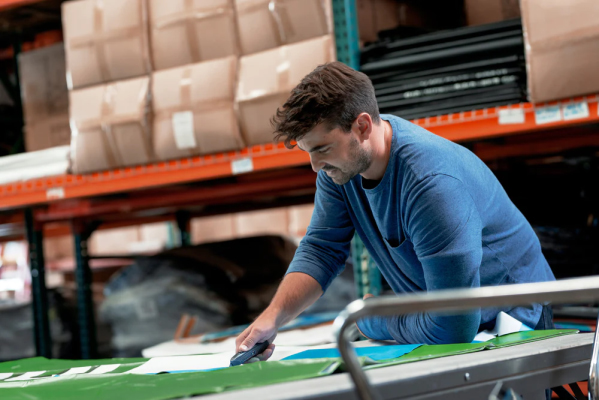
Image: Rareform
“What happens to billboards at the end of their advertising lives? One company in Los Angeles makes eco-friendly bags from billboards. Alec and Aric Avedissian, co-founders of Rareform, saw the need to recycle the vinyl from billboards into something more useful.
“Upcycling is going full speed ahead. From lending products a new lease of life to creating new, quality items starting from used materials, the approach affords multiple opportunities. And it is appealing to consumers. With this in mind, Californian brothers Alec and Aric Avedissian created Rarerform, in 2012. Formerly an analyst, Alec Avedissian began by manufacturing surfboard bags from vinyl advertising billboards.”
— Fashionnetwork.com News
Watch Video on Great Big Story Youtube Channel
Read Fashion Network article

by TRC_Admin | Dec 15, 2022 | Environmental, Nature
Photo: The Happy Paddler
“Paddle Florida has just returned from their inaugural Santa Fe Springs Celebration! Four days, three rivers, countless springs and the great food, spa and pool at Ellie Ray’s made this trip a great experience for all.”
For a day by day journal of the trip with great photos please visit:
https://www.paddleflorida.org/santa-fe-springs-celebration
Background on Santa Fe river and it’s springs
https://www.floridastateparks.org/learn/santa-fe-river-and-sink
https://www.904happyhour.com/article/explore-the-santa-fe-river–over-20-springs
— The Happy Paddler, Paddle Florida
Visit Paddle Florida

by TRC_Admin | Dec 7, 2022 | Advertising Industry, Billboards, Controversial, Environmental
Photo: The Drum article by John McCarthy
“Outdoor or out-of-home (OOH) ads are modernizing, ditching static paper and paste formats for ever-changing illuminating digital screens. Media owners are locked in an upgrade race, but with climate crisis anxiety heating up, is the sector’s savior tech compatible with the sustainability needs of society?
Earlier this month, Greenpeace tweeted a vandalized Clear Channel six-panel, which read: “This ad uses the same electricity as three average households. Global heating machine.” It was posted as a video of parkouring teens turning off overnight street signage did the rounds on social, while Europe hit all-time high temperatures. The Drum investigates…
Is the writing on the wall?
Are OOH units ‘global heating machines’? The answer is complicated. The device you’re reading this article on is technically a global heating machine. Everything uses energy – the question is whether the sector’s use of energy is irresponsible.
One 2010 study claimed a 48-sheet digital billboard (6.096m x 3.048m) consumes about 30 times more energy than the average American household in a year.
2019 research from Adblock Bristol showed that a much smaller but double-sided digital freestanding unit from Clear Channel used more electricity than four homes each year. Meanwhile, a large JC Decaux billboard was found to consume the equivalent of 36 homes ‘if it was running for a full year at maximum output.’ These are thirsty machines.
This year, a freedom of information request from The Guardian found that 86 digital out-of-home (DOOH) boards in Manchester city center each use an average of 11,501kWh of electricity every year. That’s roughly 345 households’ worth. But these units deliver £2.4m a year in rent, plus 2.8% of the revenue from each ad. That’s well in excess of £6,956 per ‘household.’
In cities all over Europe, tens of thousands of these units consume several homes’ worth of energy each year… so is it worth it?
Outdoor industry responds
Media owners have been cleaning up their act as they transition from analog to digital real estate. Their involvement in urban architecture is dependent on the public’s permission, therefore it must demonstrate utility and be receptive to their needs.
Tim Lumb, insight and effectiveness director at Outsmart, the trade body representing UK OOH, issues a defense saying media owners have been seriously reducing their carbon impact, prioritizing energy-efficient suppliers and supply chains, buying renewable energy and offsetting carbon. Anything from adopting non-fossil fuel fleets to ditching plastic coffee cups is on the table.
Richard Kirk, chief strategy officer at media agency Zenith, believes OOH is bearing the brunt of a wider anti-ad sentiment because it is ‘highly visible and very physically tangible,’but adds that the sector has a ‘much better sustainability story to tell’ than other channels.
Agencies are now calculating their carbon footprint across the entire media ecosystem in a bid to offset their impacts. They know consumer sentiment is turning hostile toward the biggest polluters, but right now the tools lack sophistication.
Research from Cavai estimates that the average online ad impression emits the same amount of carbon dioxide (CO2) into the atmosphere as driving an electric car between 0.4 to 9.65m, watching a 40 inch $K OLED TV between 1.5 to 35 seconds, or having a LED light bulb on between 30 and 700 seconds.
The energy consumption of a single impression is between 0.14Wh and 1.93Wh. Meanwhile, Ovo estimates the average annual UK household electricity consumption sits at 3,760,000Wh per year, the equivalent of a mere 26,857,142 ad impressions. This sounds like a lot, but a study from Good-Loop estimates that programmatic tech handles 2,000 times more bids than the New York Stock Exchange on any given day – 8tn transactions all in the name of targeted advertising. That’s a lot of online impressions. Furthermore, advertising likely added an extra 28% to the annual carbon footprint of every single person in the UK in 2019. So the OOH sector might be the tiniest tip of the melting iceberg of advertising’s damaging impact.
So with the wider context laid out, as Lumb points out, OOH doesn’t ‘just’ deliver advertising but serves as a public and community message board too. On billboards, advertisers formed coherent pandemic advice before the government, encouraged the public to clap for the NHS and – increasingly – issue weather warnings during periods of high heat. You’ll also see them try to rejuvenate the high street, with local businesses often embracing the tech now it’s more accessible and affordable than it was in static formats.
When considering the energy expenditure of OOH, it’s worth remembering that it, like TV, is a broadcast media – it serves one ad to many people at once (unlike ads on your mobile or computer, which are targeted and rendered on each individual device at a greater energy cost). Clear Channel reckons the UK hosts 30,000 DOOH panels – a small share of some 100m video screens in the UK…
One study [not named] claims that a 14×48m digital billboard with LED bulbs uses only twice as much power as a static billboard, and adds that LED lights use about 75% less energy than incandescent bulbs (although you need way more of them). Other studies have digital using as much as 13 times more energy.
Comparatively, a digital site will always use more energy than a static one – but if correctly implemented, media owners could meet advertiser demand with fewer sites.”
— John McCarthy, The Drum
More detail on the positioning of the industry is in the full article which can be read here

by TRC_Admin | Nov 3, 2022 | Environmental, Litter
Photo: Coastal Breeze News
“October 15th over 200 volunteers gathered on Residents’ Beach for the annual MICA sponsored beach cleanup. For many of the volunteers, this is the first time they’ve visited the beach post Hurricane Ian…
Hurricane Ian altered many coastal beaches, including Marco Island’s. Earlier in the week, Collier County sent a reminder to residents that “they are working around the clock to restore our beaches – that there is still a lot of debris in the sand and items washing up on the shores such as pieces of wood with nails and other items not visible to the naked eye.”

Photo: Coastal Breeze News
Volunteers were given the usual instructions to be very careful walking on the dunes area and to pick up only man made objects such as plastic items, bottle caps, cigarette butts, aluminum cans, etc.
We were thinking small items, but we were very surprised when volunteers started returning to the collection area with old tires, wooden planks, pieces of furniture and large netting materials – some halfway buried on the dunes and others from the shorelines. There was a theory that these old tires laden with barnacles were dumped into the Gulf decades ago to make artificial reefs – thinking they would create a habitat – and recently washed ashore by Hurricane Ian’s storm surge.
In the small item category, several pockets of the beach were littered with plastic bottle caps. Beach goers and recreational boaters bring water bottles and leave or toss away hundreds of plastic bottle caps, a hazard to marine mammals, birds and fish that mistake these small floating bottle caps as food…
In addition, Residents’ Beach electric lines were buried underground, and though that would have been a benefit during a hurricane, Ian’s surge destroyed the electrical line. LCEC had to replace the big electrical box located at Residents Beach and they installed all new underground lines along San Marco and Collier Boulevard…
Thank you to all the 200+ volunteers who showed up for the MICA sponsored beach cleanup – it was a true community event with an overwhelming show of support. Volunteers left another 500+ pounds of tires and assorted trash at the north end for Collier County to pick up. ”
— Maria Lamb, Coastal Breeze News
Read entire article

by TRC_Admin | Aug 29, 2022 | Environmental
Photo: Robin Loznak, Our Children’s Trust
“For most of his 15 years, Levi Draheim led a beachy life on a barrier island on Florida’s east coast, swimming, surfing and sailing in the nearshore waves. He dreamed of someday becoming a marine biologist. But Levi’s world is changing…
Levi Draheim lived on a barrier island on Florida’s east coast until recently, when he and his family say climate change impacts like flooding prompted them to move to the mainland.
‘It’s kind of disappointing not being able to live on the barrier island anymore, because there’s so much fun stuff that I could do. Most of my friends, they live on the barrier island,” says Levi, now in Melbourne, Fla. ‘It’s a mix of disappointment and also frustration, frustration with leaders.”
Earlier this year, Florida Agriculture Commissioner Nikki Fried announced a plan to put the state on a path toward cleaner energy, cutting the emissions Florida contributes to the climate disruptions that are already battering it. Behind the plan was a focused campaign by some 200 young Floridians all under the age of 25. Levi was the youngest.
Young Floridians filed a petition
The young Floridians had found something in state statutes, with help from Our Children’s Trust, an advocacy group, that Florida leaders, including Fried, apparently had overlooked: that Fried’s department is mandated to set goals for enhancing renewable energy use in the state. In Florida, the Department of Agriculture and Consumer Services oversees the state’s Office of Energy.
The young Floridians filed a petition for rulemaking in January admonishing the state leaders and especially Fried for ignoring the statutory mandate. The petition called on the Department of Agriculture and Consumer Services and Fried to set goals for moving Florida toward 100% clean energy by 2050. Levi felt proud of holding elected leaders accountable but felt they were capable of more.
Florida’s new goals call for 100% renewable energy by 2050…”
— Amy Green, NPR produced in partnership with Inside Climate News.
Read entire article

by TRC_Admin | Aug 29, 2022 | Environmental, Trees
Lack of Shade Photo: Kimberly Miller
“Late July blistered with sandy skies and soupy air in South Florida as a slug of Saharan dust drained clouds of rain while moisture clung to the surface like hot gum on a shoe.
The combination of a dry middle atmosphere blocking showers and moisture near the ground drove the heat index, or ‘feels-like’ temperature, into the triple digits from the East Coast to the Gulf of Mexico.
On 58th Street in West Palm Beach – a block of asphalt barren of shade trees – it reached 93.9 degrees near noon July 22 with a relative humidity of 58%. That means it felt like 108 degrees.
‘My electric bill was almost two-fold in June from what it was in March,’ said 27-year-old Varun Parshad, who sought shade with his dog Nala at Osprey Park, eight blocks south of 58th Street. ‘I try to be more disciplined with the temperature settings.’
But the Baltimore native likes to sleep with the thermostat on 69 degrees, which means his $40 bill in March was more than $80 in June…
Six miles to the southwest, the National Weather Service’s official gauge at Palm Beach International Airport registered 88 degrees at noon with a feels-like temperature of 100 degrees.
Spruce Avenue and 58th Street in West Palm Beach have no shade trees and only a few spindly palms.
The city has dedicated $7,700 to plant green buttonwoods in areas along 58th and 57th streets. The difference between 58th Street and the airport is significant enough when meteorologists and emergency officials have to make heat-related decisions…
Still, officials recognize that temperatures fluctuate by neighborhood, and it’s something some cities are trying to mitigate as they plan for a warmer future stoked by climate change…

City officials are dedicating $7,700 to plant 14 green buttonwood trees on 57th and 58th streets to throw some shade on the sunbaked blacktop. The money comes from a ‘tree mitigation’ fund that developers pay into if they can’t meet city requirements for trees on their properties. As of late July, there was $582,000 in the account…
Palm Beach County’s emergency operations center is well-equipped to handle a hurricane, but there is no history of a cooling center ever opening.
‘Our homes are typically set up with air conditioning because you can’t not have it,’ said Penni Redford, West Palm Beach’s resilience and climate change manager. ‘But then the question becomes, can you afford it?’…
She points to public libraries as a place people could go to cool off for now. But a cooling center in the future isn’t out of the question…
So, trees are, for now, what West Palm Beach has focused on as a way to cool neighborhoods and encourage more walking and biking to meet the city’s goal of reaching net-zero greenhouse gas emissions by 2050.
It promised in 2015 to plant and give away 10,000 trees in 10 years. The tally by the end of 2022 is expected to be about 7,000.
Florida’s iconic palm tree, however, isn’t even an option at the tree giveaways because they offer little shade to baking urban heat islands and capture minimal amounts of carbon – a greenhouse gas contributing to global warming.
As city officials look for more ways to cool concrete jungles and balance carbon emissions, the priority for new plantings is often broadleaf hardwood trees, not the idyllic palm…”
— Kimberly Miller, Palm Beach Post
Read entire article
