
by TRC_Admin | Aug 29, 2022 | Environmental
Photo: Robin Loznak, Our Children’s Trust
“For most of his 15 years, Levi Draheim led a beachy life on a barrier island on Florida’s east coast, swimming, surfing and sailing in the nearshore waves. He dreamed of someday becoming a marine biologist. But Levi’s world is changing…
Levi Draheim lived on a barrier island on Florida’s east coast until recently, when he and his family say climate change impacts like flooding prompted them to move to the mainland.
‘It’s kind of disappointing not being able to live on the barrier island anymore, because there’s so much fun stuff that I could do. Most of my friends, they live on the barrier island,” says Levi, now in Melbourne, Fla. ‘It’s a mix of disappointment and also frustration, frustration with leaders.”
Earlier this year, Florida Agriculture Commissioner Nikki Fried announced a plan to put the state on a path toward cleaner energy, cutting the emissions Florida contributes to the climate disruptions that are already battering it. Behind the plan was a focused campaign by some 200 young Floridians all under the age of 25. Levi was the youngest.
Young Floridians filed a petition
The young Floridians had found something in state statutes, with help from Our Children’s Trust, an advocacy group, that Florida leaders, including Fried, apparently had overlooked: that Fried’s department is mandated to set goals for enhancing renewable energy use in the state. In Florida, the Department of Agriculture and Consumer Services oversees the state’s Office of Energy.
The young Floridians filed a petition for rulemaking in January admonishing the state leaders and especially Fried for ignoring the statutory mandate. The petition called on the Department of Agriculture and Consumer Services and Fried to set goals for moving Florida toward 100% clean energy by 2050. Levi felt proud of holding elected leaders accountable but felt they were capable of more.
Florida’s new goals call for 100% renewable energy by 2050…”
— Amy Green, NPR produced in partnership with Inside Climate News.
Read entire article

by TRC_Admin | Aug 29, 2022 | Environmental, Trees
Lack of Shade Photo: Kimberly Miller
“Late July blistered with sandy skies and soupy air in South Florida as a slug of Saharan dust drained clouds of rain while moisture clung to the surface like hot gum on a shoe.
The combination of a dry middle atmosphere blocking showers and moisture near the ground drove the heat index, or ‘feels-like’ temperature, into the triple digits from the East Coast to the Gulf of Mexico.
On 58th Street in West Palm Beach – a block of asphalt barren of shade trees – it reached 93.9 degrees near noon July 22 with a relative humidity of 58%. That means it felt like 108 degrees.
‘My electric bill was almost two-fold in June from what it was in March,’ said 27-year-old Varun Parshad, who sought shade with his dog Nala at Osprey Park, eight blocks south of 58th Street. ‘I try to be more disciplined with the temperature settings.’
But the Baltimore native likes to sleep with the thermostat on 69 degrees, which means his $40 bill in March was more than $80 in June…
Six miles to the southwest, the National Weather Service’s official gauge at Palm Beach International Airport registered 88 degrees at noon with a feels-like temperature of 100 degrees.
Spruce Avenue and 58th Street in West Palm Beach have no shade trees and only a few spindly palms.
The city has dedicated $7,700 to plant green buttonwoods in areas along 58th and 57th streets. The difference between 58th Street and the airport is significant enough when meteorologists and emergency officials have to make heat-related decisions…
Still, officials recognize that temperatures fluctuate by neighborhood, and it’s something some cities are trying to mitigate as they plan for a warmer future stoked by climate change…

City officials are dedicating $7,700 to plant 14 green buttonwood trees on 57th and 58th streets to throw some shade on the sunbaked blacktop. The money comes from a ‘tree mitigation’ fund that developers pay into if they can’t meet city requirements for trees on their properties. As of late July, there was $582,000 in the account…
Palm Beach County’s emergency operations center is well-equipped to handle a hurricane, but there is no history of a cooling center ever opening.
‘Our homes are typically set up with air conditioning because you can’t not have it,’ said Penni Redford, West Palm Beach’s resilience and climate change manager. ‘But then the question becomes, can you afford it?’…
She points to public libraries as a place people could go to cool off for now. But a cooling center in the future isn’t out of the question…
So, trees are, for now, what West Palm Beach has focused on as a way to cool neighborhoods and encourage more walking and biking to meet the city’s goal of reaching net-zero greenhouse gas emissions by 2050.
It promised in 2015 to plant and give away 10,000 trees in 10 years. The tally by the end of 2022 is expected to be about 7,000.
Florida’s iconic palm tree, however, isn’t even an option at the tree giveaways because they offer little shade to baking urban heat islands and capture minimal amounts of carbon – a greenhouse gas contributing to global warming.
As city officials look for more ways to cool concrete jungles and balance carbon emissions, the priority for new plantings is often broadleaf hardwood trees, not the idyllic palm…”
— Kimberly Miller, Palm Beach Post
Read entire article

by TRC_Admin | Aug 29, 2022 | Advertising Industry, Billboards, Environmental
Photo: AV Magazine
“Switch off digital signs off at night to save energy. Government decrees that out-of-home advertising spaces, as well as display and LED signage in shop windows, are switched off from 10pm-6am to prevent an energy shortage from September.
The German government has ordered that analogue and digital out-of-home advertising spaces, as well as digital signage (displays and LEDs) in shop windows and neon letters on facades, must remain switched off between 10pm and 6am…
The EU’s gas emergency plan came into force this month, under which member countries have to save 15% on gas. Germany has a self-imposed target of 20%.
The measures come less than three weeks after Spanish shops and government offices were required to turn off digital signage displays and lighting after 10 pm, as part of the country’s commitment to reducing its gas consumption by 7%…”
— AV Magazine in Digital Signage
Read entire article
Read related article “EU energy crisis explodes: Spain orders citizens to TURN OFF lights – UK could be next” here

by TRC_Admin | Aug 1, 2022 | Codes, Derelict Structures
St. Petersburg improves its housing stock by transforming vacant lots into affordable housing.
Photo: Mark Wemple
“By dealing aggressively with the owners of dilapidated homes and vacant lots, St. Petersburg has improved its housing stock — and is transforming some vacant lots into affordable housing in the process.
James Corbett, St. Petersburg’s code enforcement director, grew up in the city, the son of a single mother. They lived in a couple of rental homes before his mother, a bookkeeper for Pinellas County Schools, was able to buy a house in south St. Petersburg. The purchase, he says, gave the family ‘a sense of place, a sense of stability.’

Today, St. Petersburg has about 110 vacant and boarded properties – roughly one-eighth the number it had in 2014, and well below pre-recession levels.
Photo: Mark Wemple
…The city’s incoming mayor at the time, Rick Kriseman, ordered employees to speed up demolitions and crack down on deadbeat property owners. During the next year, the city demolished more than 100 abandoned, privately owned structures and repaired another 62. Within four years, that list had shrunk to about 200 properties….

St. Petersburg initiated foreclosure proceedings against 635 properties. Only 70 remain in foreclosure today.
Photo: Mark Wemple
Many cities deal with the zombie-lot problem with an approach that some call ‘file and forget’ — they slap code-enforcement liens on neglected lots and hope that real estate values eventually rise enough to make the owners want to get out of arrears and either sell, develop or refinance the property.
Instead, Corbett went after the owners of the zombie lots more aggressively, using a tactic that cities typically shy away from — foreclosure. In 2016, he identified the owners of dozens of empty lots, mostly in historically black neighborhoods south of downtown. Often, the property owners owed more in taxes or fines than the properties were worth. ‘You might have $40,000 in liens on a lot that was worth $20,000,’ he says…
Today, St. Petersburg has about 110 vacant and boarded properties — roughly one-eighth the number it had in 2014, and well below pre-recession levels. Meanwhile, the city has begun turning some of the foreclosed properties into affordable housing…
The city responded by trying to turn some foreclosures into first homes for local residents instead of selling the lots to developers. Under the program, the city acquires an abandoned lot at auction, clears the title and gives it to a non-profit developer. The developer, in turn, builds a home and sells it to a lower-income family. So far, the city has acquired 50 lots this way, and nine houses have been built and sold to first time home buyers…
An Effective Tool
St. Petersburg is believed to be the first city in Florida to regularly use foreclosure to try to reduce blight, though others have since followed.
In 2019, Largo, just north of St. Petersburg, moved to foreclose on a handful of derelict properties with longstanding liens. ‘We never want to do that, but sometimes this is a tool that we have to use to get people’s property into compliance,’ the city’s community standards manager, Tracey Schofield, has said.
In 2020, Bradenton also implemented a lien foreclosure program, telling the local newspaper, ‘We hope we can take care of the worst of the worst and remove the people who own them now…’
Lien Forgiveness
Last year, Pinellas County adopted a plan to partially forgive liens on residential and commercial properties in unincorporated areas, saying code enforcement fines shouldn’t be so excessive that they hinder reinvestment and development.
At the time, the county had more than 500 properties with liens exceeding their market value — a total of about $300 million in liens. The county figured it could reduce that number to $30 million by capping liens at $20,000 per violation for a single-family home and $100,000 for another building type. Before then, the county had no limit on liens, which increase daily…
James Corbett, code enforcement director for St. Petersburg, says lien forgiveness is a good idea in many cases. He says the city often works with distressed homeowners to reduce their liens and settle their debt, but forgiveness is less effective in cases where the property has been abandoned and the owner wants nothing to do with it, he adds. In those cases, he says, the best thing for everyone — the city, the neighborhood and even the owner — could be to foreclose, clear the title, and sell the property to someone who wants it.”
— Amy Martinez, Florida Trends
Read entire article
Scenic St. Petersburg works with the city codes department to make a better city – Visit their site here
by TRC_Admin | Aug 1, 2022 | Landscaping, Nature, Planting
Photo: UF
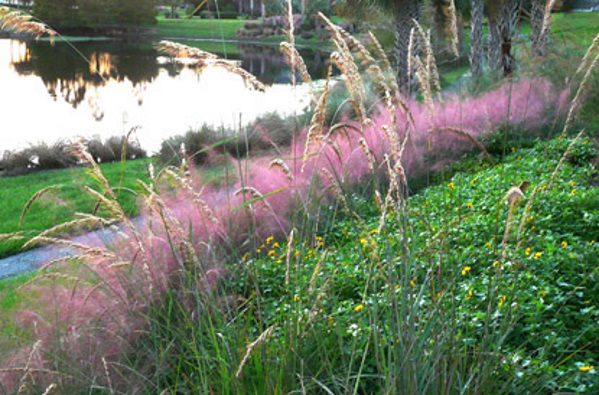
“1. Right Plant, Right Place Achieving a healthy, low-maintenance home landscape starts with putting the right plant in the right place. Select plants that match a site’s soil, light, water, and climatic conditions.
2. Water Efficiently An efficient irrigation system conserves water and helps to ensure that fertilizer and other pollution doesn’t flow into water bodies.
3. Fertilize Appropriately Proper fertilization enhances growth, increases flowering or fruiting, corrects nutritional deficiencies, and enhances the plant’s appearance. Improper fertilization can damage plants and the environment.
4. Mulch Mulch helps retain soil moisture, protects plants, and inhibits weed growth. It gives your landscape a neat, uniform appearance and is a great Florida-Friendly choice for hard-to-mow areas and shady spots.
5. Attract Wildlife Select plants with seeds, fruit, foliage, flowers, or berries that provide food. Supply sources of water, such as a rain garden or bird bath.
6. Manage Yard Pests Responsibly To prevent disease and insect outbreaks, select pest-resistant plants and put them in suitable locations. When problems do arise, remove the affected leaves or plant parts, or pick the insects off by hand.
7. Recycle Yard Waste Decomposing organic matter releases nutrients back to the soil in a form that plants can easily use. Using yard waste for composting is a sustainable way of creating organic fertilizer.
8. Reduce Stormwater Runoff Fertilizers, pesticides, debris, and eroded soil carried in stormwater can wreak havoc on our water quality. Florida-Friendly Landscaping™ seeks to retain and use as much of the rainfall and irrigation water that lands on our home landscapes as possible.
9. Protect the Waterfront Florida boasts over 10,000 miles of rivers and streams, about 7,800 lakes, more than 700 freshwater springs, and the U.S.’s second-longest coastline.”
— IFAS Extention University of Florida
Get MORE Details on each of the principals at the Extension Service’s site
