
by TRC_Admin | Jul 21, 2021 | Master Planning
“Imagine Clearwater is an investment in the redevelopment of Downtown Clearwater and its waterfront – including construction of a new 4,000-seat covered amphitheater in Coachman Park – that will be a must-see destination point in the Tampa Bay area.
Designed to connect the waterfront and the Downtown Clearwater community, Imagine Clearwater includes an expansive park and recreational spaces, a gateway plaza and bluff walk that connects the park to downtown, a bay walk promenade overlooking the Intracoastal Waterway, a lake area with picnic shelters, and an ocean-themed play area with an interactive pop-jet water feature.
The additions to Coachman Park also include the amphitheater which will accommodate a year-round performance schedule that promises to continue the city of Clearwater’s reputation as a premier location for diverse live entertainment. Construction is slated to take around two years. ”
City of Clearwater Coachman Park Imagine Redevelopment Project

by TRC_Admin | Jul 21, 2021 | Master Planning
Artist Rendering: Stantec
“In May, as costs of building materials soared, City Council members postponed a groundbreaking for the downtown waterfront’s transformation until they got a final construction price from the contractor.
Now Imagine Clearwater’s final price tag is in at $84 million, which is $20 million higher than the estimate officials had long discussed.
About $14.5 million of the increase comes from higher prices of building materials and the council’s decision to add back amenities that had previously been downsized, like water features, shade structures and landscaping, according to engineering director Tara Kivett. The project also had additional design costs and staff hours resulting from the council’s decision to change aspects of the plan over the last few years, Kivett said.
The renovation of the 22-acre waterfront into a regional park with an outdoor amphitheater, bluff walk, gateway plaza, garden and lake area has been pitched as a way to bring life to a downtown that has been depressed for decades.
Assistant City Manager Michael Delk said the price reflects the scope of one of the largest infrastructure projects the city has ever undertaken and the impact it is attempting to bring.
‘This will define our waterfront for the remainder of the century,’ Delk said. ‘You don’t tackle something like this very often. And when you do, I think you need to construct what has lasting value, lasting significance, and I think that’s where we’re ending up…’
If the council votes to proceed, construction is expected to be completed in July 2023. Underground utility work is already underway…
Last month, the City Council also began negotiations with City Center Development, led by Craig Govan, for the redevelopment of the three parcels bordering the park. Govan has proposed building a two-story food hall and brewery on the corner of Osceola Avenue and Cleveland Street; a 207-unit multifamily building with a grocery, retail stores and a restaurant on the site of the vacant City Hall on Osceola Avenue and Pierce Street; and a 100-room hotel on the vacant lot on Pierce Street…”
— Tracey McManus, Tampa Bay Times
Read entire article

by TRC_Admin | Jul 21, 2021 | Master Planning
Illustration: Riverfront Parks Now
“Downtown Jacksonville is clearly at a defining crossroads, and we implore city leaders to recognize what is at stake: the last, best chance to create a “Riverfront for All.”
Jacksonville should follow the lead of cities that have successfully combined signature riverfront parks, connected trails and well-designed Riverwalks to attract residents, visitors, events, and developer investment, while also providing protection from sea level rise and flooding.
This proven approach will cost less and give us more, especially since the city already owns riverfront land. Riverfront parks yield returns on investment that are superior and long term. What’s more, they improve the quality of life for city-wide residents of all socio-economic groups.
Other river cities have faced similar forks in the road. Civic, business and elected leaders from these cities, including Chattanooga, St. Petersburg and Greenville, have all recognized the wisdom of their decisions to prioritize public space. In fact, these destinations have become great sources of civic pride and economic growth.
We can, and should, do the same thing for Jacksonville. Now is the time to ask City Council leaders to implement this 10-point path.
1. Prioritize public space. First and foremost, prioritize and invest in meaningful public riverfront parks and green spaces.
2. Go big, world-class, and inclusive. Engage a world-class urban design firm to design a 40+ acre connected park between Metropolitan Park and the Shipyards. We need spaces that are welcoming and accessible to all people and provide ways for our community to come together with a variety of desired amenities and activities.
3. Promote connectivity. Preserve a generous and continuous ribbon of green spaces and connected parks and trails along the Northbank to allow for multiple paths for bikers and pedestrians, shade and landscaping. These paths should connect to the Emerald Trail and all downtown destinations including the Southbank.
4. Let our river breathe. It is essential to significantly expand the setbacks from 25’ to 175’ for new development proposed for city-owned property along the St. Johns River to allow for a natural green buffer to protect against flooding.
5. Utilize green resilient solutions. Implement proven green solutions for stormwater management and to mitigate sea-level rise, storm surge and climate change. Incorporate plenty of shade trees to protect against the heat, add beauty, and help slow and filter runoff.
6. Don’t block our existing views. We support robust development across Bay Street which maximizes the benefits for both the development and the public to enjoy the park amenities and river views. Any structure on the river side of the street should directly enhance the public uses and be located along Bay Street, leaving a green buffer of at least 175’ from the river.
7. Make streets into boulevards. Transform Bay Street and A. Philip Randolph into pedestrian-friendly, tree-lined boulevards incorporating wide sidewalks, planted medians, shade and street furniture.
8. Plan for maintenance. Support the creation of a non-profit Riverfront Parks Conservancy.
9. Riverfront playing, not parking. Refrain from building visible parking structures between Bay Street and the river.
10. Plan for the Jacksonville we all desire. This is a game-changing opportunity for the city, not just an amenity for a downtown neighborhood. By planning a well-designed, visually interesting public space with a variety of attractions and amenities, our riverfront can entice Jaxsons from all walks of life to come and spend the day.
Let’s make sure we have ample space not only for play areas, cafes and bars, native plants, and cultural activities, but also for hosting large events, concerts, tailgates, and festivals such as our future Super Bowl, NFL Draft, Gator Bowl, and Florida-Georgia parties!”
— Nancy Powell, Jimmy Orth, Natalie Rosenburg, Susan Caven, Ted Pappas, Barbara Ketchum, Michael Kirwan, The Riverfront Parks Now Coalition, Guest Columnists, The Florida Times Union
Read entire article
Visit Riverfront Parks Now
Visit Scenic Jacksonville

by TRC_Admin | Jul 21, 2021 | Master Planning
Photo: Chris Urso, Tampa Bay Times
“City leaders have pledged it is just the beginning.
While the landscape changed for nearly everything in the last year due to the coronavirus pandemic, one Pasco County community managed to blossom, making tangible changes for its future.
City leaders have pledged it is just the beginning.
Last year, about the time of the COVID-19 lockdown, New Port Richey officials were beginning a months-long project to rebrand their community and kick off a conceptual plan for redevelopment.
Blessed with a historic downtown and the Cotee River winding through both business and residential areas, city officials knew that New Port Richey had unique attributes to allow it to experience a renaissance.
Earlier this month, Tom McGilloway, a consultant with Mahan Rykiel, presented the final report on downtown redevelopment to City Council. He described the public investments New Port Richey can make to bring significant financial dividends down the road, once private investors come aboard.
The city will dip into its own coffers, spending up to $37 million to complete its goals over the next decade, but it could see $235 million in private investment for its efforts, McGilloway said.
Public investments could include adding lanes for bicycles and motorized scooters, improvements to the facades of city-owned buildings, and adding needed shade by planting trees or constructing shade structures in public areas like Railroad Square or along city streets. Signage, more interesting pavement treatments and development of Oak Park on River Road could be other areas slated for improvement.
‘Private investment will follow public investment,’ city economic development director Charles Rudd assured council members earlier this month. But he said the city’s recent successes are going to spur that on. ‘They (private developers) will have more of a sense of security, that this is long term and it’s going to continue…’
An ongoing project has been the renovation of the historic Hacienda Hotel by Jim Gunderson, who also renovated the Lakeside Inn in Mount Dora. The hotel is on the National Register of Historic Places, and Gunderson is hoping to have the 42-room boutique hotel in the heart of downtown ready to open in September, Manns said.
The city’s waterfront garnered plenty of interest from the consultants. Changes were recommended for Sims Park and its boat launch, including finding a better solution for boat trailer parking so that more of the waterfront could be opened up for other uses.
Much of the consultant focus, fueled by public input gathered at several sessions last year, was mindful of a desire to keep future New Port Richey development to scale and consistent with the community’s character. A community that was safe and walkable were also on the list of priorities. And while the focus was centered on downtown, the consultant and the City Council were clear that there needed to be a way to also improve residential areas, which will drive business development…
Even as New Port Richey’s conceptual planning process ends, its chance to show off what has been accomplished will come next month, when the city hosts the 2021 Preservation on Main Street conference, presented in partnership with New Port Richey Main Street and the Florida Trust for Historic Preservation.
Entitled “Reimagining the Road Ahead,” the conference will be held in New Port Richey from July 21-24 and will feature education sessions and other activities featuring New Port Richey’s special attributes.
Conference participants will visit the Oelsner Mound, recently added to the National Register of Historic Places, and several cemeteries, and they will also hear how the city rebranded itself during a pandemic and about the restoration work at the Hacienda.
Other side activities for participants will include boat rides on the Cotee River, a tour of Pasco’s stilt houses and a ghost tour.”
— Barbara Behrendt, Tampa Bay Times
Read entire article

by TRC_Admin | Jul 21, 2021 | Historic, Master Planning
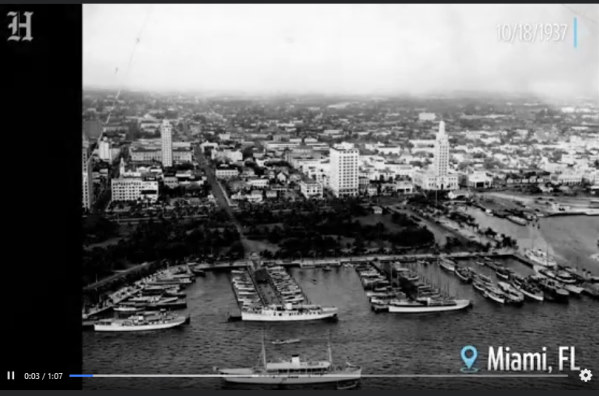
Video – “Watch the Miami skyline evolve over decades” 1937 – 2019
Video: Miami Herald Facebook
